
Cooking at home is one of the most rewarding skills you can develop. It saves money, gives you control over ingredients, and turns everyday meals into something you can be proud of. The good news is that you don’t need to memorize hundreds of recipes to become a confident cook. Once you understand a handful of core techniques, you can prepare a wide variety of dishes and even create your own. Here are the essential cooking methods every home cook should learn.
Why Techniques Matter More Than Recipes
Recipes tell you what to do, but techniques teach you why it works. When you understand how heat, fat, and moisture affect food, you can adapt a recipe to what’s in your pantry, fix mistakes as they happen, and cook with more confidence.
Learning techniques also makes cooking faster and more enjoyable. Instead of constantly checking instructions, you’ll start recognizing the sounds, smells, and textures that tell you food is ready. Over time, these skills let you look at a recipe and understand it at a glance, because you’ll already know the methods behind each step. That understanding is what separates following instructions from truly cooking.
Mastering Basic Knife Skills
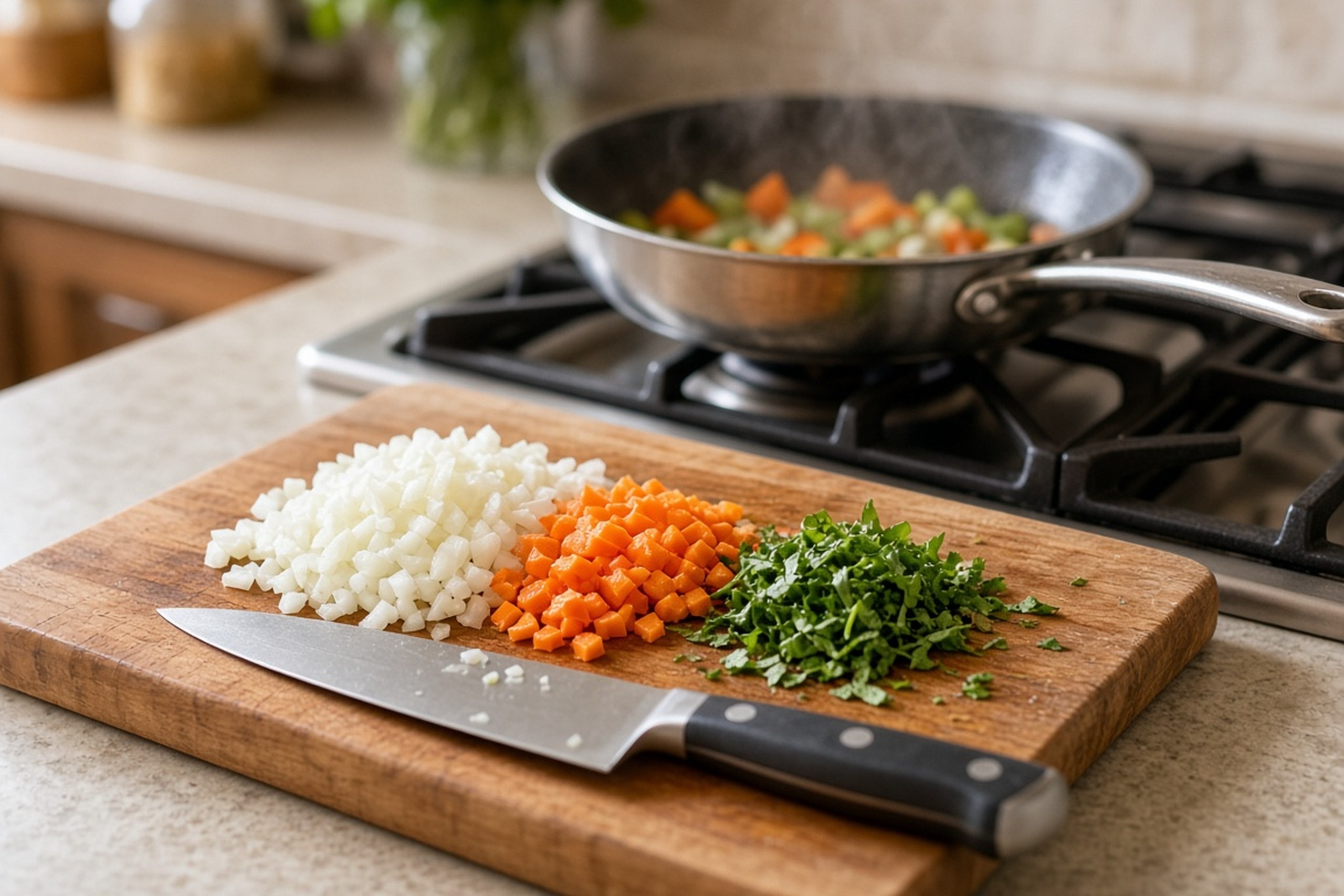
Good knife skills are the foundation of efficient cooking. Learning to hold a chef’s knife properly, keep your fingertips curled away from the blade, and cut ingredients into even pieces makes prep work safer and helps food cook evenly.
Start by practicing a few basic cuts, such as slicing, dicing, and mincing. Keep your knives sharp, since a dull blade requires more force and is more likely to slip. A stable cutting board placed on a damp towel will also help keep you safe.
Sautéing and Pan-Frying
Sautéing involves cooking food quickly in a small amount of fat over medium-high heat. It’s ideal for vegetables, thinly sliced meats, and aromatics like garlic and onions. The key is to preheat the pan, avoid overcrowding, and keep ingredients moving so they brown without burning.
Pan-frying uses a bit more oil and slightly lower heat, making it well suited to chicken cutlets, fish fillets, and potatoes. Letting food sit undisturbed until it releases naturally from the pan helps create a golden, flavorful crust.
Roasting and Baking
Roasting uses the dry, surrounding heat of the oven to cook food evenly while creating caramelized, deeply flavored exteriors. Vegetables, whole chickens, and cuts of meat all benefit from this hands-off method. Cutting ingredients into similar sizes and spreading them in a single layer helps them roast rather than steam.
Baking relies on the same oven heat but usually refers to breads, casseroles, and desserts. Because baking often depends on precise ratios, measuring ingredients carefully and preheating the oven fully are especially important.
Boiling, Simmering, and Steaming
Cooking with water may seem simple, but knowing the difference between a rolling boil and a gentle simmer makes a big difference. A rapid boil works well for pasta and blanching vegetables, while a gentle simmer is better for soups, stocks, grains, and delicate foods that might break apart.
Steaming cooks food with hot vapor rather than direct contact with water, which helps vegetables keep their color, texture, and many of their nutrients. A simple steamer basket set over a pot of simmering water is all you need.
Braising and Stewing
Braising combines two techniques: first browning food in fat, then cooking it slowly in a covered pot with a modest amount of liquid. This method transforms tougher, more affordable cuts of meat into tender, flavorful meals and works beautifully for hearty vegetables and legumes as well.
Stewing is similar but usually involves smaller pieces fully submerged in liquid. Both methods reward patience, and they often taste even better the next day as the flavors continue to develop.
Grilling and Broiling
Grilling cooks food over direct high heat, creating smoky flavor and attractive char marks. It’s a favorite for burgers, vegetables, kebabs, and seafood. Managing heat zones, with one hotter area for searing and a cooler area for gentle cooking, gives you more control.
Broiling is essentially upside-down grilling done in your oven. It’s a convenient way to melt cheese, finish casseroles, or quickly cook thin cuts of meat, but it requires close attention since food can go from browned to burned in moments.
Building Flavor With Seasoning and Sauces
Knowing how to season food properly is just as important as cooking it correctly. Salt enhances natural flavors, acids like lemon juice or vinegar add brightness, and fresh herbs bring freshness at the end of cooking. Tasting as you go is the best way to learn how these elements work together.
A few simple sauce techniques can also elevate everyday meals:
- Pan Sauces: Add a splash of stock or wine to a hot pan after cooking meat, then scrape up the browned bits for a quick, flavorful sauce.
- Emulsions: Whisking oil slowly into vinegar or mustard creates smooth vinaigrettes and dressings.
- Reductions: Simmering a liquid until some of it evaporates concentrates its flavor and thickens its texture.
- Roux-Based Sauces: Cooking flour and butter together before adding liquid forms the base of creamy sauces and gravies.
Practicing Kitchen Safety
Safe cooking habits protect you and everyone you cook for. Wash your hands and surfaces often, use separate cutting boards for raw meats and fresh produce, and refrigerate leftovers promptly. A food thermometer is an inexpensive tool that helps you confirm meats and poultry have reached safe internal temperatures.
Keep pot handles turned inward, never leave hot oil unattended, and keep a lid nearby in case of a small grease fire. These simple precautions quickly become second nature.
Growing Confidence in Your Kitchen
Becoming a skilled home cook doesn’t happen overnight, but every meal you prepare builds experience. Focus on mastering one or two techniques at a time, repeat them with different ingredients, and pay attention to what works. Mistakes are part of the process and often teach the most valuable lessons.
With these essential techniques in your toolkit, you’ll be able to follow recipes more easily, improvise with confidence, and enjoy delicious homemade meals any night of the week.