
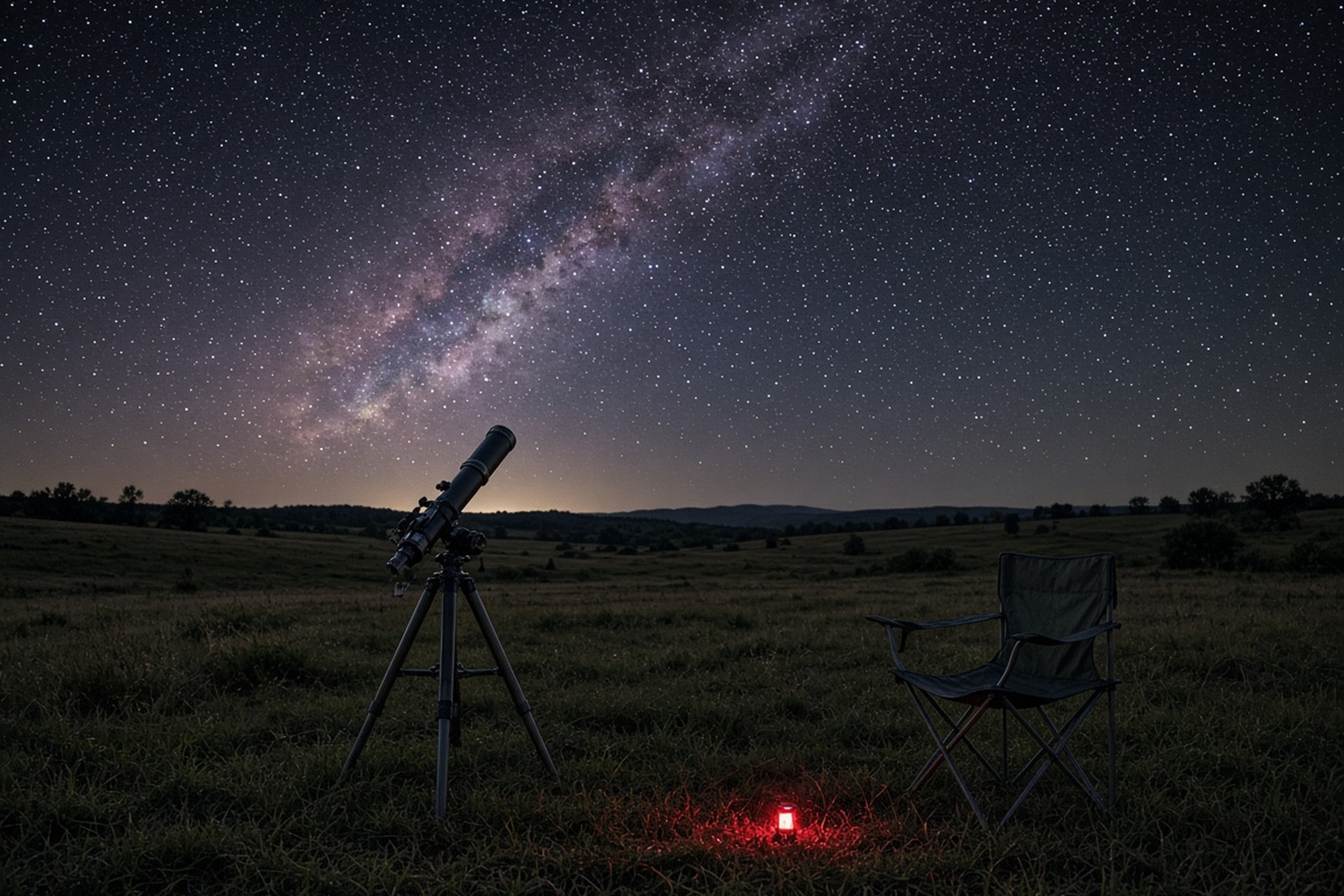
Looking up at a clear night sky full of stars is one of the oldest and most rewarding hobbies there is. You don’t need expensive equipment or a science degree to enjoy it, just a little curiosity, some patience, and a reasonably dark place to stand. Once you learn a few constellations and planets, the sky starts to feel like a familiar map that changes with the seasons. In this guide, we’ll cover how to begin stargazing, what gear is actually worth having, and how to find great viewing spots close to home.
Start With Just Your Eyes
Many beginners rush out to buy a telescope, but your own eyes are the best starting tool. With them you can spot bright stars, the Moon’s phases, several planets, and on dark nights even the soft band of the Milky Way.
Spend a few evenings simply learning what’s up there. Find one or two easy patterns, such as a well-known constellation, and use them as signposts to locate their neighbors. This builds the sky knowledge that makes any equipment far more useful later.
Use a Star Chart or Sky App
A star chart or astronomy app helps you identify what you’re seeing. Many apps let you point your phone at the sky and show the names of stars, planets, and constellations in real time.
Switch the app to night mode if it offers one, since a bright screen can ruin your night vision. Printed planispheres, which rotate to show the sky for any date and time, are a classic alternative that never needs charging.
Let Your Eyes Adjust to the Dark
Your eyes need time to adapt to darkness, usually around twenty to thirty minutes for full night vision. During that time, fainter stars gradually appear that you couldn’t see when you first stepped outside.
Protect that adjustment by avoiding white light. A flashlight covered with red film or one with a red mode lets you read charts and move around safely without resetting your vision.
Consider Binoculars Before a Telescope
A decent pair of binoculars is often the best first purchase for new stargazers. They’re affordable, easy to use, portable, and show far more than the naked eye, including craters on the Moon, star clusters, and the brightest moons of Jupiter.
Look for a pair that’s comfortable to hold steady, or rest them on a fence, car roof, or simple tripod adapter. Binoculars also stay useful for birdwatching and travel, so they’re rarely a wasted investment.
Choose a First Telescope Wisely
When you’re ready for a telescope, focus on ease of use rather than high magnification claims. A telescope you can set up quickly is one you’ll actually take outside.
Here are a few things to keep in mind:
- Aperture matters most: The width of the main lens or mirror determines how much light it gathers and how much detail you’ll see.
- A stable mount: A wobbly mount makes viewing frustrating, so sturdiness is worth paying for.
- Portability: Think about where you’ll store it and how far you’ll carry it.
- Try before buying: Attending a public viewing night lets you look through different types first.
Understand Light Pollution
Artificial light from streets, buildings, and signs brightens the sky and hides fainter stars. In a busy city you may only see a handful of bright stars, while a rural area can reveal thousands.
You can still enjoy the Moon and planets from town, since they’re bright enough to shine through light pollution. For deeper sky views, though, it’s worth traveling to darker surroundings when you can.
Find Good Stargazing Spots Near You
Light pollution maps, available online, show how dark the sky is in different areas and can point you toward nearby locations with better views. Parks, open countryside, beaches, and hilltops away from town often make good choices.
Some regions also have officially recognized dark sky parks or reserves that protect their night skies and sometimes host events. Before heading out, check opening hours, parking rules, and whether night access is allowed, and always let someone know where you’re going.
Time Your Sessions Well
The best nights are clear, dry, and moonless or close to a new Moon, when the sky is darkest. Check the weather forecast and cloud cover before you go, as conditions can change quickly.
Keep an eye on astronomy calendars for highlights such as meteor showers, planetary alignments, and eclipses. These events are great motivation to get outside and are often visible without any equipment at all.
Dress Warmly and Pack Smart
Nights can get surprisingly cold, even in warmer seasons, because you’ll be standing or sitting still for long periods. Bring layers, a hat, and something to sit or lie on.
A small kit makes sessions more comfortable: a red flashlight, your chart or app, a warm drink, insect repellent where needed, and a notebook to record what you saw.
Try Simple Night Sky Photography
Once you’re comfortable finding your way around, you might enjoy capturing what you see. Many modern phones have a night mode that can record bright stars and the Moon, and a small tripod makes a big difference by keeping the camera perfectly still.
For wider views of the Milky Way, a camera with manual settings and a longer exposure works well. Start simple, experiment with different settings, and treat each attempt as part of the learning process.
Connect With Local Astronomy Groups
Amateur astronomy clubs exist in many towns and cities, and they’re usually very welcoming to beginners. Members often share advice, lend equipment, and organize observing nights at dark sites.
Planetariums, observatories, science centers, and libraries sometimes run public events as well. Joining one is a fun way to learn faster and meet people who share your interest.
Discovering the Wonder Above You
Stargazing rewards patience and curiosity rather than expensive gear. Start with your eyes, learn a few landmarks in the sky, and gradually add tools as your interest grows.
Every clear night offers something new to see, from a passing planet to a sudden meteor. With a little preparation and a good dark spot, you’ll soon find yourself looking forward to the next chance to step outside and look up.